Add this

Friday, 25 June 2021

IT'S TIME TO BE OUTRAGED , MY LORDS.

   The Supreme Court has disappointed again. While not interfering with the bail granted to the three student activists- Natasha, Kalita and Asif- in the Delhi riots and " conspiracy " case, it has, vide its order of 18th June 2021, effectively stayed the Delhi High Court order on UAPA (Unlawful Activities Prevention Act). To my mind, the court had no option but to confirm the bail for to do otherwise would have been to legitimise the lawlessness of the state and to throw all legal principles to the winds. But it has undone this good work by once again adopting a balancing act  (becoming all too familiar now) to keep the executive in good humour, by decreeing that the Delhi High court decision of 15th June 2021 cannot be quoted as a precedent for other UAPA cases. This is as perplexing as it is unfortunate.

  The court has given no reason for the virtual stay, other than to express " surprise" that the bail order is of one hundred pages, and that it has " pan- India" implications. The surprise we can live with ( nothing surprises us any more) but the pan- India part is more difficult to swallow. And this is the reason: UAPA is a pan- India legislation so obviously any judgment on it will have pan-India implications too. Which is a very good thing: for far too long have our courts avoided questioning the draconian and unconstitutional provisions of this law. If one High Court has finally done so, its judicial impact SHOULD be felt all over the country. Why is the apex court so uncomfortable with this ?

The Supreme Court's order is also self contradictory. By confirming bail to the three accused it implicitly accepted the rational and reasoning of the Delhi High court order which resulted in the decision to grant them bail. But by " staying" the order and deciding to " examine" its correctness it seems to be suggesting that it is not sure of its legality! This is a legally untenable position, shows a certain waffling on the part of the Hon'ble judges, and perhaps a desire to accommodate the sudden panic in the Home Ministry and Delhi police.

  Legal luminaries can argue about all this till Mr. Adityanath's cows come home; I am no luminary, not even a 9 watt LCD bulb. But I do know a few adages, one of them being: War is too important to be left to generals. Similarly, I would venture to postulate that Justice is too important to be left to lawyers and judges. For these worthies are the bone crunchers, endlessly chewing on lifeless words, phrases, rulings, ratio decindi and what not. In the process they forget about the flesh and blood of human reality, of the lives being tortured by their unending, academic and arcane arguments. They forget that at the end of the day law and justice is nothing but common sense, and that it is high time they extricated themselves from the thicket of legalese they have lost themselves in, back to the straight, wide path of common law and common sense. As the eminent British jurist and writer John Mortimer said: " No brilliance is needed in the law, nothing but common sense and relatively clean finger nails."

  And it is nothing but common sense which the Delhi High Court has displayed in its order, clothed in unassailable legal principles. It is common sense to demand prima facie evidence of wrong doing before locking up someone for years without trial. It is common sense to distinguish between a common crime and terrorism. It is common sense to insist that dissent is not sedition. It is common sense to rule that if an accused cannot be granted a speedy trial then he is entitled to bail, as Justice ( Retd) Deepak Gupta pointed out in an interview the other day. It is common sense to declare that the Advisory Board of UAPA cannot be the final word or arbiter of a person's guilt and that the courts are entitled - nay, duty bound- to look into its decisions. It is common sense to pronounce that inferences and speculation cannot take the place of hard evidence and proof. What is there to " examine" in these self-evident truths, as the Supreme Court proposes to do?

  No matter how you look at the Delhi High Court order- from a layman's or a legal eagle's perspective- it fully meets the requirements of both the law and of common sense. The principles and law enunciated by it require no further " examination ", which is why the Supreme Court's freezing of it boggles the mind. It is high time time our judges took their noses out of their legal tomes and felt the pulse of the people. They should not have an exaggerated sense of their infallibility, should not confuse real justice with their love for didactics , should understand the unending trauma of the public. The judiciary would do well to remember that all great legal and social reforms have been driven by the people, not by the courts or governments- the suffragette movement for voting rights for women, the anti- slavery campaign, the right to abortion, the acceptance of gay rights, the abolition of apartheid, the right to privacy. Law and justice follow in the wake of what is right, not the other way around.                                                                                                         And every time our apex court has been insensitive to such deep feelings of the populace it has had to eat its own words and revise its orders very soon. Just in the recent past it has had to quash the infamous ADM Jabalpur order; it had initially set aside the brilliant Delhi High court decision of 2013 on decriminalisation of gay sex but had to revise its position in 2018; in 1962 it had ruled that privacy is not a fundamental right but has since upheld it in a number of judgments; in 1985 it had held that adultery was a crime but just last year it held otherwise. I have no doubt at all that in this case also, the Supreme Court will have to ultimately lift the stay: as they say, history doesn't repeat itself, but it rhymes.

  A sensitive and responsive judiciary should anticipate, and be one step ahead of,  social and legal changes and reforms; it should not be merely reactive; it should not live in awe of the executive. This is especially true of the India of today where judges need to step out of their book- lined studies and sterile chambers and smell the stench of repression in the streets, see the accumulating debris of a collapsing criminal justice system., the 45 million pending cases, the indiscriminate use of UAPA and sedition laws, the 2% conviction rate in UAPA, the 500,000 incarcerated prisoners of whom 70% are undertrials, the increasing number of people acquitted after years in jail without bail ( Ilyas and Irfan in Maharashtra have just been found not guilty after spending nine years in jail under terrorism charge, 115 persons have been granted bail in Karnataka, Akhil Gogoi , an MLA in Assam has been acquitted just this week in one of the two UAPA cases lodged against him ). The increasing number of acquittals/ bails in UAPA demonstrate vociferously the illegal manner in which such cases are fabricated simply to incarcerate those activists whom the government finds inconvenient. The Delhi High court order goes a long way to stem this rot, and by staying it the apex court has undermined not only the sanctity of the High Court but also the expectations of the citizens. All without citing any cogent reason for doing so.

  I sometimes wonder: what will it take for our superior courts to grasp the fact that, in their obsession with technicalities and legalese, they are smothering the real spirit and essence of justice- common sense and compassion ? Is it that they feel that they themselves are immune from the state sponsored savagery being inflicted on the common public outside their sanitised ivory towers ? Was Benjamin Franklin right, after all, when he said: " Justice will not be served until those who are unaffected are as outraged as those who are ?"

  It's time to be outraged, my lords.


Friday, 18 June 2021

BABA RAMDEV vs THE INDIAN MEDICAL ASSOCIATION : A SHAMBOLIC WAR


   Baba Ramdev is nobody's fool, as the IMA (Indian Medical Association) seems to think. Anyone who started life by churning his stomach like a washing machine and ended up with a multi billion dollar empire has to be a smart cookie. And just marvel at his latest coup: the acquisition of the Rs. 40000 crore Ruchi Soya in insolvency proceedings. The company owed Rs. 12146 crore to the banks, and the Baba took it over by paying just Rs. 4350 crore, the beauty of the "package" being that he put up only Rs. 1000 crore of his own money, the remaining Rs. 3350 crore coming as loans from the same banks who had taken a "haircut" of Rs. 8000 crore on earlier loans to the same company! Post the take- over, the company is now valued at Rs. 35360 crores. How's that on an investment of just Rs. 1000 crore ? It takes years of Kapal Bharti and Alom Vilom to rise to such strategic brilliance.

  One is also bemused at the manner in which the Baba has suddenly become the mascot, champion and spokesman of Ayurveda, a traditional school of Indian medicine, courtesy the IMA's fulminations. For the fact is that he is as much of an Ayurvedic doctor as Kangana Ranaut, even less so, because she at least can improve your testosterone levels. To qualify as a doctor in this discipline one has to have passed BAMS (Bachelor of Ayurvedic Medicine and Surgery) which Ramdev has not done. Why then is IMA engaging with him so seriously? By doing so it is conferring on him a legitimacy he cannot claim or deserves.

  Which is why I find his ongoing spat with the IMA so amusing, like a Spy vs Spy episode in those comics we read as kids. Ok, let us admit upfront that the Baba's comments about doctors- that, since they could not even save themselves from Corona, how would they save others?, that they are responsible for thousands of deaths - were not only distasteful but also showed no respect or gratitude for the hundreds of doctors who had died in the line of duty over the past fifteen months. But to demand that he be arrested for sedition or to escalate it into an Ayurveda vs Allopathy battle does no credit to either Patanjali or the IMA. In fact, the escalation has reached ridiculous levels- according to a complaint in a Delhi court the IMA President, by advocating Allopathy, is trying to convert Hindus into the Christian faith ! And in a tit-for-tat an FIR has just been filed against the Baba in Chattisgarh by the local chapter of the IMA !

  Because the simple fact is that neither has emerged from the pandemic smelling of roses. Both these hoary disciplines- Ayurveda and Allopathy- have created confusion, doubts and misgivings in the public mind and have sought to monetize the crisis for their own respective benefit. In the process the casualty has been the scientific temper, the faith of the people in medicine- and perhaps many lives.

  Ramdev's version of Ayurveda as an antidote to Covid is clearly counterfeit and has no basis in science. He began by extolling the virtues of cow dung and urine; he then claimed that Pranayam exercises would counter respiratory failures and replace ventilators. He finally produced his magnum opus- Coronil- obtaining for it an ill-advised endorsement from the Union Health Minister; his attempt to claim approval from WHO was promptly shot down by that organisation itself. But not before the placebo had garnered hundreds of crores in revenue from gullible and desperate buyers. Till date there is not a shred of evidence to indicate that Coronil was subjected to any trials or that any of its claims have been scientifically verified. By conflating Yoga with Ayurveda and Ayurveda with crass commercialism, the Baba has brought this established school into disrepute and created huge confusion in the minds of millions of people.

  But here's my point- Allopathy has not done much better either. Led by the WHO, Dr. Fauci, the US CDC (Center for Disease Control) and our own ICMR (Indian Council for Medical Research), its constantly changing stand on crucial issues, unrepentant volte faces on advisories, and bickering among themselves, have done a lot to promote vaccine hesitancy and scepticism. And, like the Baba, earned untold billions for pharma companies, hospitals and vaccine makers. Pfizer will reportedly make a record profit of US$ 29 billion in 2020 ! Here is an illustrative list of points on which "modern medicine" (as opposed to "traditional" Ayurveda ) has failed to provide a consistent or definitive answer:

* It was initially said that the virus is spread by heavy droplets, but later some doctors claimed it was spread by lighter aerosols, increasing the distance it could travel and infect.

* So now no one knows whether the "safe" distance is six feet or six meters or six feet under.

*  Fauci earlier advised that wearing masks is not required, but now insists on it.

* Just last year drugs like  Hydroxychloroquine and Remdesivir were being touted as miracle cures but now they have been struck off the list by WHO as being of no use. In India, people have been paying ten to twenty times the actual price for these drugs in the black market.

* No two doctors can agree on the use of steroids in severe cases. Some say it's a life saver, others are of the view that it leads to cardiac failures and cytokine storms.

* There is still no clarity on the ideal gap between two doses of the vaccine ; recommendations extend from four weeks to twelve weeks, depending on whether you are Boris Johnson or Narendra Modi.

* No medical authority or regulator has satisfactorily explained as yet why persons who have received both doses of the vaccine still get infected, and some of them die. Of what use is a 95% or 97% efficacy rate in such cases?

* Similarly, the gods of Allopathy have been just as clueless about the emerging new complications- the various types of fungus, gangrene and blood clotting AFTER vaccination. How is it that the three phase trials of various vaccines failed to alert the manufactures and regulators to this likely effect of vaccines?

* Everybody (experts as well as governments) are now hiding behind the broad spectrum excuse of  "variants" and "mutants", and busy finding names for them.

* Nobody knows by when this virus will be defeated, if ever. There is already talk of possible annual booster doses.

* The latest debate , equally confusing as the others, is whether the Third Wave will be specially lethal for children below the age of twelve. There are as many authoritative views on this as there are doctors.

What the illustrative list above indicates is that there is as much confusion in the Allopathic camp about Covid as there is in the Ayurveda camp. Which perhaps is not unexpected since this is a novel virus and research takes time to deliver results. Medicine is not an exact science and not all answers are instantly available. This is especially true of zoonotic diseases, which are only now beginning to emerge as we intrude deeper into the natural environment. But then, neither of the two have the right to occupy the moral high ground and preach to the other. Or to us, who have been ripped off of thousands of crores in medical and hospital charges and usually handed back the dead bodies of our loved ones in return. Enormous profits have been made by both the adversaries and they should now end their vaudeville act and get back to answering some of the issues listed above.

  IMA, in particular, should stop patronising and demeaning Ayurveda and tone down its hostility to it. Ayurveda is as much of a science or non-science as Allopathy, and of far older vintage. It should not treat Baba Ramdev as a representative of Ayurveda, and should see him for what he actually is: a savvy businessman who has married medicine with FMCG (Fast Moving Consumer Goods) with stupendous success. Ayurveda is far bigger and of greater consequence than he is. The real proponents and practitioners of authentic Ayurveda should, on the other hand, recognise the enormous damage that the Baba is doing to their science. They should break their silence and come out openly in its defence and denounce the Baba before he hijacks their discipline and takes it to the global stage, as he has done for Yoga. In short, if the IMA must do battle, it should do so against Ramdev and not Ayurveda. And Ramdev should stick to Pranayam, biscuits and soya and leave medicine to those who are qualified and trained for it.

   But lets end this on a lighter note. A cousin of mine (from Kanpur, naturally) has a very pertinent question for Baba Ramdev and Dr. J A Jayalal of the IMA, probably in connection with an impending marriage in the family : if a girl vaccinated with Covishield marries a boy with a Covaxin shot, will their children be immune to all variants? And my cousin, who is a bit of a persistent Kanpuria, also wants to know whether Patanjali will get to manufacture the Sputnik vaccine in India, and if so, then will it be known as Putinjali ? Valid questions for IMA and the Baba, don't you think ?

Over to you, gentlemen.  


Friday, 11 June 2021

DEBUNKING THE " TINA" MYTH

   Mythology forms a large part of the BJP-RSS combine's world view ( such as it is), and the TINA  (There Is No Alternative ) myth is an important part of it. TINA is, predictably, the last refuge of the government's supporters who have now run out of money, oxygen, jobs, Remdesiver, vaccines, doctored statistics and hollow excuses to shore up their claim to continuing in power. This is, however, as much of a fairy tale as the claims of Baba Ramdev and the sermons of Saint Jaggi of encroached tribal lands fame. Incidentally, here's something most of us are probably not aware of: TINA was not coined as a political acronym but as an economic one. It is famously ascribed to the supporters of Margaret Thatcher's market capitalism, when she started dismantling the socialist structure of the UK economy: There is no alternative to market reforms, they said, hence TINA. The pandemic, of course, has revealed how wrong the Thatcherites and Reaganites were, just as it is now exposing how wrong the BJP acolytes are in repeating it ad-nauseam, albeit in a political context. 

  The first, and obvious response to the TINA argument is: any alternative is better than the present dispensation. Because, in these seven years, the entire edifice of the country has been dismantled and the gains of the last seventy years frittered away. In just about every internationally accepted parameter of good governance and economics the decline has been precipitous; here are some of the most recent global rankings of India:

HDI                             131/ 189  

HUNGER                     94/ 107

PEACE                         139/163

HAPPINESS                 144/153

HEALTHCARE            145/195

GENDER GAP              140/156

ENVIRONMENT          168/180

INTERNET QUALITY  79/85

WATER QUALITY        120/122

PRESS FREEDOM        142/180

PER CAPITA GDP         142/189 

 Every single indicator has declined since 2014. And it would not be correct to blame the pandemic alone for this consistent decline, for the slide had started in 2016 itself. Add to all this the shrinking of the economy by 7.3% in 2020, the highest unemployment rate in 45 years, the 200 million people pushed below the poverty line, the 32 million who have exited the middle class. I am not even going to speak about the social unrest, the gutted institutions, the collapse of federalism, the handling of the pandemic, our relegation to a " partly free democracy " by respected international monitors, for these are well known. We cannot do any worse, no matter which alternative regime comes to power at the center. As a democracy, at least.

  Secondly, democracies are not suited for self- anointed "strong men" who take pride in being obstinate, contemptuous of science and learning, feel they are omnipotent and omniscient, do not tolerate dissent or criticism, and are insensitive to public opinion. Their macho image does initially appeal to the electorate, and they perpetuate it by creating a constant churn, keeping the populace unsettled, stoking all kinds of fears and imagined threats. An apprehensive populace then looks for a "strong" leader to protect them, an instinct handed down to us from our monkey ancestors. We look for the "alpha male" to protect the clan, and who better than the Superman or Homo Deus we mistakenly elected ?                        It is this basic humanoid trait that autocrats exploit to rule, but its downsides soon become apparent and the disillusionment sets in. Of the world's four larger-than-life leaders in democratic countries - all in this alpha male mode- two have been consigned to history- Trump and Netanyahu-, one ( Bolsanaro of Brazil ) has reached the end game of his rule , only Mr. Modi is still ensconced in power. In those three countries also the TINA factor was trotted out by supporters, to be proved wrong in the face of disastrous governance. It's not certain that India will buck this global trend in 2024.

  The next specious argument advanced by the TINA supporters is the " After me, the deluge" chestnut, viz. that Mr. Modi is indispensable, that without him there would be complete chaos, a balkanisation of the country, a threat to our borders. The opposite, in fact, is true. This government has already handed over thousands of sq. kms of territory in Ladakh to the Chinese with barely a whimper. We are at loggerheads with all our immediate neighbours, and now even Nepal has raised a border dispute with us! The federal structure of the country today is under unprecedented strain, with the Center refusing to accept that under the Constitution we are a union of states, in which the latter are equal partners. The latest confrontation over the Chief Secretary of Bengal has opened another dangerous chapter in the usurpation of powers of the states- the brazen attempt to convert the very character and charter of the All India Services ( the IAS, IPS and Indian Forest Service). These services are unique, they are the only civil services in the world that have been given a constitutional status , with dual and pari-passu control by the Center and the states. Sardar Patel's vision was that they would act as a bridge between the Union and State governments, as a unifying force between the states. And this vision has worked very well for the last 70 years. Even at times of political differences between Delhi and the states, the respective bureaucracies have ensured that coordination between the two was maintained and the system has worked. No more, however :  increasingly, Mr. Modi's over arching and autocratic government is trying to establish exclusive and over-riding control over these services. This can only be a recipe for balkanisation and the last nail in the coffin of the federal character of the country.

  India does not need a " strong" central government on a constant overdose of steroids, it needs one which cooperates with the states and is sensitive to their concerns, one which provides leadership through consultations and mutual respect for the Opposition, not through midnight diktats based on pique and vindictiveness. In fact, what suits our country best is a coalition government at the Center, not a single party one with a brute majority which can be misused. The country's governance has suffered both times a single party has come to power with its own over-whelming majority - Rajiv Gandhi in 1984 and Mr. Modi in 2016/2019. The most productive and successful regimes in the last thirty years have all been coalition governments- those of Narsimha Rao, Atal Behari Vajpayee and Manmohan Singh in UPA-1. All three governments did well by the country in every important sphere- economy, welfare, environment, center-state relations, human rights of the people, social integration, even external relations. By contrast, Mr. Modi's majority government has been an unmitigated disaster; even worse, it has undone a lot of the good work of the previous dispensations and set the country back by decades.

   It cannot be denied that no single political party can provide a national alternative to the BJP. The only one which could have done so - the Congress - is in self-destruct mode and will take a long time, if ever, to come in from the cold. The answer to TINA is a coalition of strong regional parties. Only a coalition can work in a country with 29 states, 22 languages ( as per the Eighth schedule of the Constitution), 19500 other languages, 6 major religions ( not counting the faiths professed by 6 million tribals). In one respect at least India is a unique global miracle- as Ramchandra Guha has pointed out in INDIA AFTER GANDHI, all other countries are based on, and defined on the basis of, their ethnicity, religion or language. India is the only major nation which is defined by multi-ethnic, multi-lingual and multi-religious values. This diversity in one nation is indeed nothing less than a miracle. And that is why only a multi-party government- a COALITION government- can do justice to this diversity. No one political formation can capture, and serve, the splendour of this diverse civilisation. A coalition of parties also provides the checks and balances, the regional voices, the representation to diverse interests without which a democracy cannot function. It provides strength, not weakness.

  It can work ( it has in the past) if only these regional satraps can recognise the common enemy and subjugate their individual egos and agendas for a larger national good. If the voter can free himself from the web of lies, false promises, majoritarian paranoia and the mirage of religio- cultural domination. The choice exists and it is for us to grab it with both hands. If we still refuse to see the writing on the wall then one will have to agree with Ernest Hemingway:

" And in the end the age was handed

The sort of shit that it demanded."


Friday, 4 June 2021

THE HIGHWAY DHABA - A TRIP DOWN MEMORY LANE.

   I am essentially a " dhaba " man. (A dhaba is a traditional, north Indian, road side eatery without any frills or pretences). Give me a choice between a good, clean dhaba on a highway and a fancy restaurant and I shall plump for the former every time, even if you are paying the bill! This is not a reverse snobbishness, or my inability to decipher "Potatoes Dauphinoise" or "Coq Au Vin", but a conviction that there is no better return on culinary investment than what a genuine dhaba can provide.

  I think I've acquired this trait from my dad, a rugged travelling sales executive, who had bookmarked a dozen dhabas between Hazaribagh and Kanpur  when we would drive all the way in his Landmaster on our annual winter vacations. The family would stop only at these places for breakfast and lunch, sometimes sprawling out on string charpois laid out by mine host to beat the afternoon heat. Though I must state that neither UP nor Bihar have developed the dhaba culture to the level of Punjab and Haryana.

  The role of the dhaba in my life was further reinforced during the three years I spent in Timarpur, just outside Delhi university, while studying what our Prime Minister would no doubt call " Entire English Literature." Even back then it was not easy to get lodgings in Jubilee Hall, Gwyer Hall or Hindu college hostel and after six months of being booted out of their terraces and verandas at the midnight hour by vigilant wardens I, along with a handful of friends, took refuge in the "barsatis" and servant quarters of Timarpur, at rents which the beggars outside Khan Market would spurn today even as a dole. One continued to stay on there after passing out of the university, even after we had all become Lecturers at the unbelievable salary of Rs. 700 per month.

  Most of us were preparing for the UPSC exams- Pullock Chatterji, Anil Pradhan, Sandip Maiti, Nikhilesh Bannerjee (he wasn't interested in the IAS or IPS, he preferred his guitar), Vinay Shukla, Rupen Guha Mazumdar, Gautam Bannerji. There were other disreputable characters too, but I can't remember their names now. During the day we would all attend our classes, and study in the evenings and late into the night. But one thing was immutable- for dinner we would all collect at a dhaba behind BD Estate market, come rain, shine , or someone's girlfriend. ( I never rated a girlfriend but that's a story for another day, when Neerja departs on one of her trips to Kailash Mansarovar).

  Our dinner dhaba was run by this giant of a man, six feet tall and a genuine 56 inch chest. His name was Pahalwan ( I have since discovered that every second dhaba owner is called Pahalwan: it helps to ensure that customers pay their bills). He claimed to have been a cook with Pratap Singh Kairon, one of Punjab's legendary Chief Ministers, and was missing a thumb as proof of it.  Pahalwan's wife, equally well endowed, helped him with the cooking. Our fare was simple- it had to be, on the allowances our dads gave us- and maybe once a week we indulged in a mutton or egg curry. Our host kept our plates filled, while we exchanged notes on our preparations for the exams. But here's the clincher- Pahalwan NEVER asked us for money, he just kept a note and told us we could pay him whenever we were able to, if necessary, after we got a job. His explanation was (in Haryanvi Hindi, of course): "You boys have all left your homes far away and are all studying to become something in life. Don't worry about money. What kind of a man would I be if I could not feed a few students?"  In modern banking parlance we were all NPAs but, unlike the captains of industry today, not one of us defaulted on our dues to him. We all owe him a lot- cramming is so much better on a full stomach. I have not been to Timarpur again, but I hope Pahalwan has built himself a big, fancy place in Khan Market or Saket and no longer has to give credit to impecunious students.

  Other dhabas stick in my mind even after many years. As an officer under training in 1976 at the Himachal Institute of Public Administration near Dhalli, a suburb of Shimla,  I used to spurn dinner in the mess, and would walk a kilometer every night in pitch darkness to a dhaba in Dhalli, nodding politely to the occasional leopard or jackal one came across. This dhaba was run by a sardarji who had an auto mechanic garage on the road level and a dhaba in the basement. I am convinced he used the same oil for the car engines and the cooking. But he made the most awesome egg bhurji in mutton curry ( no meat pieces), served with tandoori roti; I had nothing else for three months and never tired of it.

 As a probationer in Mandi, I once had to go to Shimla and boarded an HRTC bus. In the front seat was the local MP (Member of Parliament);  I think his name was Ganga Singh. Those were more honest days when even MPs travelled by public transport, not in lumpenised convoys of doubtfully acquired SUVs. We knew each other and got chatting. By lunch time we had reached Bhararighat, which was ( and still is) a concatenation of about twenty dhabas and sweet shops. ( The public toilet was constructed only in the eighties as an after-thought). Ganga Singh took me to a medium sized establishment and ordered that most iconic of Himachali dishes- " kadhi chawal", Rs. 2.50 for a plate. And what a dish it was! Ever since then ( it's been 45 years) whenever I pass through Bhararighat I just have to stop and do an encore. It was a bit awkward when I was DC of the district some years later, but I used to cover up by parking my official car near the public toilet ( even DCs have bladders) and casually walking over to the dhaba incognito  for my plate of kadhi chawal.


      Sharmaji's dhaba at Carignaino. [ Photo by Sidharth Shukla ]

  And then, nearer in time and space, there is the wonderful dhaba of Anantram Sharma at Carignaino in Mashobra. Situated in an idyllic glen five kms from my home, I discovered it only recently but it more than makes up for the absence of  Food Panda, Swiggy and Zomato in these regions. The house speciality is poori- chhole, poori-aloo matar and atta halwa, all well worth a leisurely drive. Sharmaji, I'm told, is a school teacher and if he teaches half as well as he cooks his students have a bright future !

  The real valhalla for dhabas, however, is the GT road, the Delhi- Chandigarh highway which I have been travelling now for almost 50 years. There's a dhaba every hundred meters, with coloured flags outside and a bloke waving you in with a flourish, not unlike Suvendhu Adhikari being welcomed into the BJP. But here's a tip which one of my HRTC drivers gave me a long time ago- don't get taken in by fancy furnishings and hoardings, go to the dhaba which has the maximum number of trucks ( not cars or buses) parked outside it. Truck drivers spend most of their life on the road, and the one thing high on their list is good food, so where there are trucks there will be good fare ( and a surreptitious bottle of hooch, if you are so inclined). Most of these joints serve vegetarian fare, or " Vaishno" food, as they like to announce in bold letters.

  I always stop at only one joint- JHILMIL DHABA just after Karnal. It's more like a desi food court with four dhabas and a number of factory outlets selling everything from shoes, gift items, pickles to home appliances. One can sit outside under a huge awning or in air-conditioned rooms inside. It has spotlessly clean washrooms. Being a creature of habit, and adventurous only when it comes to writing about the BJP, I always order the same cuisine- stuffed tandoori parathas and sweet lassi: two of the former and one of the latter see me through all the way to Puranikoti, still six hours away.


           The JHILMIL dhaba at Karnal [ Photo by author]

  But the traditional dhaba is now facing stiff competition from more fancy variants: glitzy buildings with huge car parks of the Mehfil and Haveli variety, and branded chains like MacDonalds, Sagar Ratna, Haldiram and Bikanerwala. The GT-Karnal road (the earlier NH 1, now NH 44)  is a gold mine for restauranteurs, with 150,000 PCUs ( Passenger Car Units) of daily traffic volume or about 600,000 folks looking to eat and powder their noses. But I personally can't see any sense in eating the same kind of urbanised, branded stuff we eat in our cities twelve months every year- the uttapam or burger on GT road tastes no different from what it does in Defence Colony or Saket. When on the highway, why not try the highway stuff and keep alive this distinctive cuisine?

  But I have a sneaking feeling that Mr Gadkari and NHAI are of a different bent of mind. Because the new fangled toll roads, expressways and super highways are killing the traditional dhaba. With these roads being made for the prime purpose of extorting as much money as possible from the hapless motorist, access to them is tightly controlled and it is no longer possible for dhabas to spring up along them. At the most, space is ear-marked for one or two "plazas" every hundred kms or so, but these are auctioned to the highest bidder, which can only be chains with deep pockets. They serve the same stereotyped bilge they dish out in the cities but at even higher prices since now they have a literally captive clientele. So, regardless of which end of the alimentary canal is crying out for your attention, you have no option but to stop at these joints and get ripped off. On the Yamuna Expressway there are only two such plazas between Delhi and Agra, on the Eastern Peripheral there is not a single one between Rai and the Ghaziabad/ Ghazipur exit. Ditto for the Western Peripheral.

  These toll roads are featureless conveyor belts intended to transport us from one end to the other in the quickest possible time like motorised sausages. Their specs have no place for the romance of travel, for the typical  highway cuisine, for the choice between a tandoori paratha and a genuine " tadka dal. " The dhaba may, in another decade or so, go the way of A.H.Wheeler in our railway stations. But of course we'll be shaving an hour off the travelling time and that's what matters, doesn't it?

Saturday, 29 May 2021

BOOK REVIEW: THE WORLD BENEATH THEIR FEET BY SCOTT ELLSWORTH

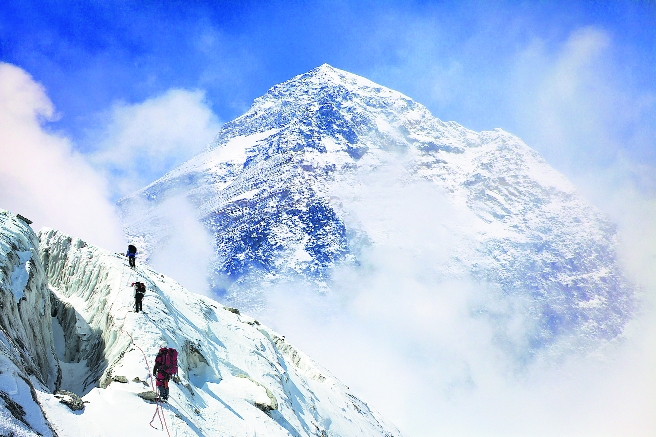
 My review of this book  was published in THE TRIBUNE on April 4, 2021. It is a fascinating account of the attempts made to conquer the ten highest peaks in the Himalaya in the last century. The article/ review is reproduced below.


Avay Shukla

“This is a book about the mountains. But it is also a book about the men and women who dared to match them.” These opening lines by the author provide the essence of this detailed narrative on conquering the Himalayas in the first half of the last century, particularly the ‘Achttausenders’, the 10 peaks above 8,000 metres. The lofty crown of the Himalayas remained the only unexplored territory on the planet where the human imprint was still missing.

For long, nobody made it beyond 27,000 feet on Everest. The weather, logistics of maintaining a supply chain and pitching camp on narrow ledges and precarious cornices — the odds needed a superhuman effort to conquer.

This fascinating book is set against a twin backdrop: one, the evolution (skills, technology, knowledge) of mountaineering which was as yet a developing adventure activity; and two, the geo-political context of the time — the waning power of England, the rise of the Nazis in Germany, the aftermath of the Great War. In a proxy competition, the ‘Achttausenders’ became the focal point of rivalry between England, USA and Germany for global stature and influence. Conquering the Himalayas turned into a goal that would validate their respective ideologies and their greatness, in the eyes of their own people and the world.

The author’s focus, however, never shifts for long from the incredible men and women — the mountaineers and the Sherpas — whose heroic feats of resolve, perseverance, strength, courage and sacrifice are recorded in mesmerising detail. Like the three doomed Sherpas in the 1939 attempt on K2 who climbed an incredible 6,600 feet in one day from Base Camp to Camp Seven to rescue a stranded American climber. All four were never heard of again, just some of the hundreds these mighty peaks have taken as sacrifice for man’s presumption in challenging these eternal sentinels.

By the 1930s, the highest peaks of the Karakoram and Hindukush ranges had more or less been parcelled out among the three great powers: Everest “belonged” to the British, Nanga Parbat to the Germans and K2 to the Americans. None had been summitted in spite of numerous attempts; only Nanda Devi had been conquered, by an Anglo-American team in 1936, but it was not an ‘Achttausender’.

This book records, in captivating detail, the various attempts made to conquer these forbidding peaks: four on Everest by the British after George Mallory and Sandy Irvine’s ill-fated expedition of 1924, three by the Americans on K2, three on Nanga Parbat by the Germans who perhaps suffered the maximum casualties. But these intrepid mountaineers kept coming back again and again, in a love affair where rejection was just not acceptable. Their indomitable resolve is ultimately what this book is about.

The first ‘Achttausender’ to be climbed successfully was Annapoorna, the 10th highest peak in the world. This was achieved by a French team, led by Maurice Herzogg, on June 3, 1950. For the British, who had so far failed in 10 attempts on the Everest, this was a spur to redouble their efforts.

By this time, however, China had occupied Tibet and barred all foreigners from it; the usual northern route was no longer available and the peak could be approached only from its south face in Nepal. Fortunately for them, this route had been attempted by Shipton and Smythe in 1938 and the valuable information collated by them would now come in useful.

In 1953, the British launched their fifth attempt on Everest after Mallory’s failed 1924 expedition, this time led by Edmund Hillary. His climbing partner was Tenzing Norgay, by now a respected veteran, a Sherpa sirdar whose endurance, technical prowess and genial nature had earned the respect of mountaineers from all countries. Nobody had made it beyond 27,000 feet on Everest so far, and for good reason: the weather, the sheer logistics of maintaining a supply chain and pitching camp on narrow ledges and precarious cornices, the final “Hillary’s step” below the summit were all indomitable odds that needed a superhuman effort to conquer.

The first summit team comprising John Hunt and Da Namgyal fell short within sight of the peak because of the lateness of the hour: they could perhaps have attained the summit but would surely have perished on the way back to Camp Nine. Two days later, it was the turn of Hillary and Tenzing, and they reached the highest point on the planet at 11.30 am on April 29, 1953. It was the stuff legends and fantasies are made of; it was also a befitting gift to the new monarch of Britain, Queen Elizabeth II, who was crowned two days later, adding a timeless lustre to her coronation. This was not the moment to note that neither of the two heroes were British!

For the climbing buff, however, this book answers one of the two enduring mysteries that have haunted mountaineers for long. The first — did Mallory and Irvine make it to the peak 19 years before Hillary and Tenzing? — remains unanswered and will probably remain so forever. But the second — who among the latter two stepped on the peak first? — has been settled. The author quotes from Tenzing’s interview: “We went on slowly, steadily. And then we were there. Hillary stepped on top first. And I stepped up after him.”

It was a moment of triumph. But it was also a moment of sadness, for the last frontier had been vanquished. Romance should never end.


Saturday, 22 May 2021

MR. MODI MAY CONTINUE TO RULE, BUT CAN HE GOVERN ?

   If Bal Narendra had spent some more time in school instead of rushing off to sell tea at a railway station which did not even exist at that time, he would have imbibed some wisdom from a couple of old adages: Don't burn your bridges behind you because you may need them again tomorrow, and, Be courteous to the people you cross on your way up because you will meet them again on your way down. These would have stood him in good stead in this hour of his biggest political crisis when he and the country face a complete melt-down. For he has burnt every bridge, antagonised every peer and decapacitated every institution which could have helped him cross the troubled waters he now has to negotiate.

  Modi's destruction of India can be divided into three broad phases- Demonetisation, 2019, and Covid. In the first one he knocked the bottom out of the economy with demonetisation and GST and intimidated the media into a subservient silence. In the second, after winning another term, he demolished federalism by pulling down as many as nine elected state governments and rewriting our relationship with Kashmir, putting the goal of Hindu rashtra on the front burner with CAA and NRC, extracting the Ram Mandir judgment from the Supreme Court. In the third phase he put Parliament in the freezer along with the vaccines he never bought, upgraded the Hindu rashtra to a Corporate Hindu Rashtra by ramming through the three Farm laws and amendments to the Labour laws, quietly acquiesced to Chinese occupation of our territories, and made a horrendous mess of the management of the pandemic.

  These phases overlap, of course, but running through them is a malevolent common thread- of subjugation of constitutional and regulatory institutions, gross misuse of enforcement and police agencies, undermining of the judiciary, politicisation of the armed forces, an overbearing arrogance and insensitivity to public opinion, ruthless crushing of dissent and false propaganda and image building on a Goebbelsian scale.

  Modi and his fawning cohorts, who still wear their N-95 masks over their eyes instead of their noses, consider these phases as great achievements and milestones in the establishment of a majoritarian state. But they are now discovering that it is precisely these "achievements" which have defenestrated him and have made him unfit and unable to govern this nation any longer. He has systematically blunted the tools of governance and now finds he has no arrows left in his quiver with which  to confront the apocalypse facing the nation right now. He can blame no one but himself- and his hubris and insatiable appetite for power- for this.

  He talks now of everyone giving up their differences and standing behind the government to fight the pandemic as one united nation; this would be ironic if it were not so hypocritical. He has spent the last seven years in doing just the opposite: fragmenting the nation along religious, caste and regional lines, simply in order to accumulate more political power. His government has gone after every sub-set of society with a vengeance- students, farmers, intellectuals, journalists, scientists, blue collar workers, voluntary organisations, academia, even social workers and activists. There have been repeated nation-wide strikes against his disastrous policies- 250 million workers in November 2020 against the new Labour laws, one million doctors on December 11th, 2020 against the licence given to Ayurvedic doctors to perform operations, one million bank employees against the policy of privatisation of PSU banks; the farmers' strike and the OROP protests continue unabated. But he has remained adamant and intransigent. He has said not one word about the misery of the migrant labour. And he now expects these disparate groups to unite behind him?

  Take federalism, or in his own dissembling words, " cooperative federalism". He now expects that the Opposition parties should not criticise his mishandling of the pandemic and should support him. That's a bit rich, considering that his loudly stated objective is to wipe out the Opposition totally, a " Congress mukt" India and a " One Nation One Party" future. In pursuit of this he has used the CBI, NIA, ED, Income Tax Deptt. and friendly police forces to target leaders of political parties; the thousands of crores in the opaque Electoral Bonds have been gainfully utilised to pull down democratically elected governments in nine states, elections have been customised to suit the BJP's strategy.

  Modi has made a mockery of federalism, he is genetically unwilling to share power, just as he cannot share the credit for anything. Time and again he has maliciously encroached on the jurisdiction of states, whether it is by passing legislation such as the Farm laws or the GST Act or the law that makes the Lieutenant Governor the " government" in Delhi, showing utter contempt for the 20 million residents of the capital who have twice booted out his party in favour of AAP. He has changed the terms of the latest Finance Commission to siphon off more funds from the states' share of central revenues, he will not give them the promised GST dues, he uses the NIA, CBI and ED to thwart the state police forces from pursuing investigations that may embarrass his govt. or party. He completely usurped all powers under the Pandemic Act to deny the states any role or policy making in combating the pandemic, whether it be lockdowns, SOPs, vaccination production, sale or distribution. It is only now, when his gross incompetence and arrogance has blown up in his face, that he is making desperate attempts to throw the ball back in the states' corner. And he expects the states to " cooperate" with him on these terms?

 He expects the Opposition parties to cooperate with him, but when a former ( and much respected ) Prime Minster and Sonia Gandhi write to him with specific and sensible suggestions for fighting the pandemic, he ignores them with the haughtiness of a Kublai Khan. Even worse, he gets his underlings to reply to them in despicable language and to issue press statements accusing them of conspiracy and worse. He mocks a lady Chief Minister with cat-calls. And even after all this he is trying to portray himself as a victim of the Opposition's non-cooperation! One can't get any more delusional than this.

  He has calcified the institutions  which are meant to guide and advise the government, to act as circuit-breakers and watchdogs, as  bridges between the ruler and the ruled. Parliament has been made dysfunctional, the Supreme Court has been brought to heel ( even though some High courts are still holding out), the Election Commission is now just another subordinate govt. department, the Information Commission blocks more information than it releases. The whereabouts of the Lokpal is one of the biggest mysteries of the decade, bodies like the NHRC and the Minorities Commission simply issue notices which no govt agency bothers to reply to, the CAG spends more time redacting his reports than on auditing, on papering over the govt's misdemeanors ( and worse) than on highlighting them.

  Even the Union Cabinet is a window dressing for decisions taken by the PMO, and all reports indicate that Ministers count for nothing, which is why they have all gone into hiding during this terrible phase of the pandemic. Secretaries to govt. are not expected to contribute to policy making, they are required to simply carry out the PMO's orders. The best brains no longer come to the central govt., they prefer to stay in their states. In effect, therefore, Mr. Modi's reliance is only on a handful of bureaucrats ( predominantly from Gujarat) who pass muster on the loyalty quotient but have little else to recommend them. Under the CDS, General Vipin Rawat, even the defense forces are gradually moving to a dangerous point- " political" control instead of the constitutionally mandated " civilian" control.

  To conclude, Mr. Modi has locked himself up in his echo chamber and lost touch with reality. He has no ideas or instruments left to fight the pandemic with. The machinery of state has been made dysfunctional, the judiciary will take a long time to reassert its oversight role ( if ever), the mainstream media lacks all credibility, vast sections of the people have been alienated, the Opposition has reason aplenty to believe that cooperating with him is like hitching a ride on a tiger, the scientific experts have been sidelined in favour of Coronil and dark chocolate, people are finding it increasingly difficult to trust him, either in word or action. He is no longer seen in battle and the pandemic is more or less running its course. It will peter out eventually, and the Prime Minister will emerge from the debris and dust of Central Vista to take credit for it, but the corpses floating in the Ganga will be telling a different story this time. 

  Every party, institution, expert, state or service which could have helped Mr. Modi combat the pandemic has been deliberately bent, twisted, hollowed out or contemptuously discarded in his dispensation and rendered useless, and the Prime Minister is now like a General with no troops or weaponry. His vanity had convinced him that he could, like Icarus, soar to the sun alone, with no help from anyone. Like Icarus, he is now finding out that he should have heeded the advice of Daedalus. He may very well win again in 2024 with the help of his behemoth party, unlimited funds, undoubted oratorial skills, misuse of official machinery and an Opposition more fractured than a shale oil-field, whose leaders prefer to hang separately than to hang together. He will probably continue to rule but his quiver is empty and he has lost the capacity to govern. That, and not just the pandemic, is our collective tragedy.

Saturday, 15 May 2021

SUNRISE IN PURANIKOTI


                                                           A new dawn in Puranikoti

The sun doesn't just rise in my village of Puranikoti ( 7000 feet, pop 190 ) - it explodes. One moment the eastern horizon is a bluish hue faintly tinged with pink, the next there is an burst of gold over the Theog ridge-line, at the center of which is a searing circle of light. Somehow, this dazzling sphere always reminds of me the massive headlight beam of the Bullet engines of my youth, rounding the last curve before Kanpur station and bathing me in a sudden glare, drilling its burning light into my very soul. It's a childhood moment recreated in Puranikoti every morning. One is reminded also of the immortal description of the rising sun in The Rubaiyat of Omar Khayam:

" And lo! The hunter of the east has caught

  The Sultan's turret in a noose of light!"

                          
                                           The author's cottage snared by the hunter of the east
                                                     ( Photo by Sidharth Shukla )

There are, unfortunately, no turrets in Puranikoti, and no Sultans either; just four Additional Chief Secretaries, two already consigned to history and two still in harness, hoping to lasso the Chief Secretary's chair before the sun rises too often.

  I'm usually out of my house by 6.00AM for my morning walk through the dense forests of deodar, blue pine and oak, come winter, summer, monsoon or lockdown. There is an indescribable magic in the way the forest comes to life, after a cold night, under the benediction of the warming rays. I always marvel at the way the hidden avian orchestra tunes up, individual calls to begin with, gradually merging into a happy, almost Wagnerian crescendo: the cooing of the wood pigeons, the convoluted melody of the whistling thrush, the rat-a-tat-tat of the woodpecker, the chi-chi-chi of the Himalayan magpie, the haunting aria of the "koel". One never sees them, of course, for theirs is a different world, and it's perhaps better that way. Occasionally, however, one can spot a jungle fowl or a koklash sunning itself in a patch of sunlight on the forest floor or scurrying across the road into the undergrowth. An hour of this is enough to make one forget the sordid world we humans inhabit, with all our diseases of the mind, body and soul.


                                           Our morning -tea companion ( Photo by Neerja)

  I'm back for a cup of tea on our terrace by 7.00, and for the first scolding of the day. No, it's not by Neerja- she gave up many years ago when she discovered that, for a bureaucrat, no admonition counts unless it is given in writing and begins with " The Governor is pleased to inform you....." My first rebuke of the day is administered by a termagent of a " bul-bul" which has taken up unauthorised residence in my weeping willows and insists on a B+B arrangement. She arrives on the dot, cursing all the way, and demands her breakfast pronto. I initially tried giving her bird seed and bajra/ rice grains but she rejected them like a fussy dowager. She prefers biscuits( Parle G, the company will be happy to note), crisp rusk toast and my own favourite " namak paras". What Bul-bul wants Bul-Bul gets, or I don't get my morning cuppa! She sometimes brings along a friend or two if she feels the snack is up to the mark. The sparrows and tits come in her wake, after a five minute conference call among themselves, and oust the bul-bul by the sheer weight of numbers, in true democratic fashion.


                                                                     The scent of a rose

  There is another magic which the warming rays of the sun work on the trees and plants around my house. The gentle breeze gradually gets suffused by a medley of fragrance and subtle smells, all mingling into one  indescribable bouquet which no incense stick or air purifier can hope to match. That's because it does not have just one source, it is the breath of deodar, pine, oak, rose, hawthorn, apple blossom, wild daisy, hibiscus, hydrangia, willow, horse chestnut, morning glory and even the grass which I allow to grow wild. There is just no way I can pin down this scent and its components, just as one cannot describe what constitutes love or faith. You just know what it is, and you savour it , be grateful that you were allowed to experience it and to share it with the creatures of nature who are actually its true owners.. There is one man- made scent in this mix, however- the smell of burning wood. It is the contribution of Suresh, the village carpenter, who lights up his " hamam" or wooden stove sharp at eight o' clock every morning to heat the water for his ablutions. Since his hut is situated just above my cottage the smoke drifts down to me. But I don't mind at all- the smell mixes well with the fragrance of nature, and it reminds me of my trekking days, nights rather, getting to know better my friends ( and a certain Old Monk) before roaring camp fires!

  The morning traffic begins at about the same time. The first mover is Darshana Devi, a matriarch who lives with a large joint family about half a kilometer away. She has extensive fields of vegetable crops and a herd of seven cows and one mean looking bull. Promptly at eight o'clock the herd is driven to the forests above my village by either Darshana herself or one of her many daughters-in-law, its slow progress marked by the barking of the dogs in the various houses along its winding route. The bovine will graze on the slopes below Wildflower Hall the whole day and return in the evening. They have the right of way because here cattle class IS the premium class ( as Mr. Shashi Tharoor will be happy to note!)

  Half an hour later the twice-a-day HRTC bus arrives, on its way to Mashobra and Shimla. It is usually packed with school teachers, govt. employees and villagers who still nurture the fond hope that an application submitted in the HP Govt. Secretariat will get their long pending work done. They will, of course, be much wiser but sadder citizens on the return trip, but for the moment they are as chatty as my bul-bul and the sparrows. I take the bus sometimes to go to Mashobra bazaar when even the local mice start giving my empty larder a miss. Or when Ms Sitharaman, our Finance Minister, announces that the economy is looking up, for then I know that the only thing looking up will be the fuel prices, and it's time to either join Darshana's cows or put one's trust in the HRTC.

  The bus is followed by a few pick-ups taking the local vegetables to the subzi mandi in Shimla ( it's cauliflower these days), and by about nine o'clock our morning ritual is more or less over, and somnolence returns to Puranikoti. The sun has done its job here and can now move on to the great cities of the country. It is, after all,  at the heart of our existence and determines the rhythm of life. Ernest Hemingway put it very well in DEATH IN THE AFTERNOON:

" The sun is very important..... The Spanish say: El Sol es el major torero- The Sun is the best bull-fighter and without the sun the best bull-fighter is not there. He is like a man without a shadow."

I'm fortunate, I guess, that the rising sun casts a long shadow in Puranikoti, even though I'm a small man.